A plain-language guide to every medication in a fertility cycle — what each one does, when it's given, and the brands you'll actually see in Thailand.
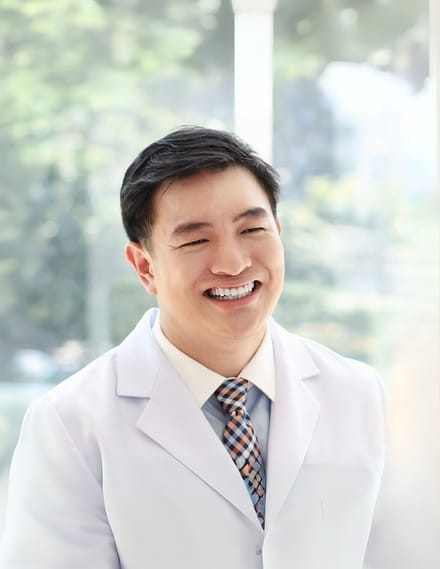
✍️ Written and medically reviewed by Dr. Patsama Vichinsartvichai, MD, MClinEmbryol, EFOG-EBCOG, EFRM-ESHRE/EBCOG, FACOG — Reproductive Medicine Specialist · Last reviewed:
Every fertility patient — and even people who've already been through IVF — knows that medication names can feel overwhelming. This guide walks you through every drug we use, grouped the way we actually use them in clinic.
Treatment breaks down into two halves: the egg-collection cycle (stimulation, ovulation blockade, and the trigger shot) and the embryo-transfer cycle (uterine-lining preparation). The medications differ, but the goal is the same — the right cavity at the right moment, receiving the right embryo.
The goal here is to grow more than one follicle in a single cycle so we have several eggs to fertilize. Stimulation drugs come in two forms: oral tablets and injectables.
Oral stimulants (tablets)
Used mostly when someone will conceive naturally, in PCOS patients whose ovaries aren't ovulating, in IUI cycles, or in mild/minimal-stim IVF. Two are widely used in Thailand:
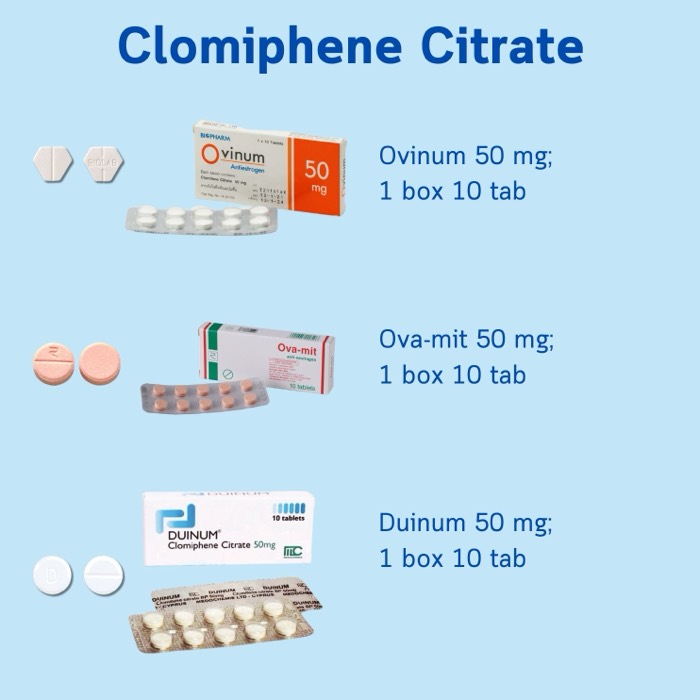
Clomiphene Citrate
SERM — estrogen receptor antagonist
Binds estrogen receptors in the hypothalamus, tricking the brain into raising FSH — which drives follicle growth.
Downside: also blocks estrogen at the uterine lining, so the endometrium may be thinner than normal. Ovulation can happen 25–50% earlier or later than expected, and effects can carry over into the next cycle.
50 mg tablets · 1–3 tabs/day × 5 days from cycle day 3–5 · Brands: Ovinum, Ova-mit, Duinum
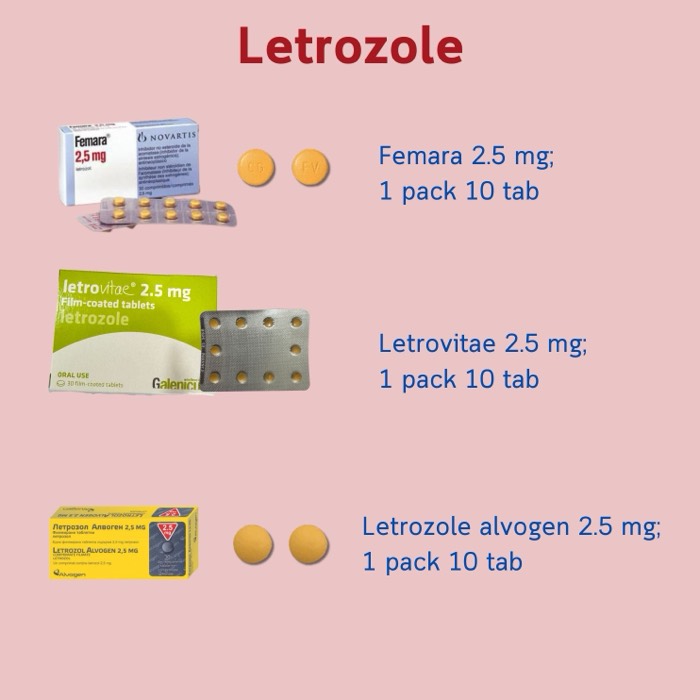
Letrozole
Aromatase inhibitor
Blocks the aromatase enzyme that converts testosterone into estrogen. Lower estrogen prompts the brain to release more FSH — again driving follicle growth. Originally a breast-cancer drug; research supports off-label use in stimulation.
Downside: same thin-endometrium risk as clomiphene, but usually milder.
For IVF/ICSI where we want many follicles, injectable FSH is the workhorse. Modern products fall into three families:
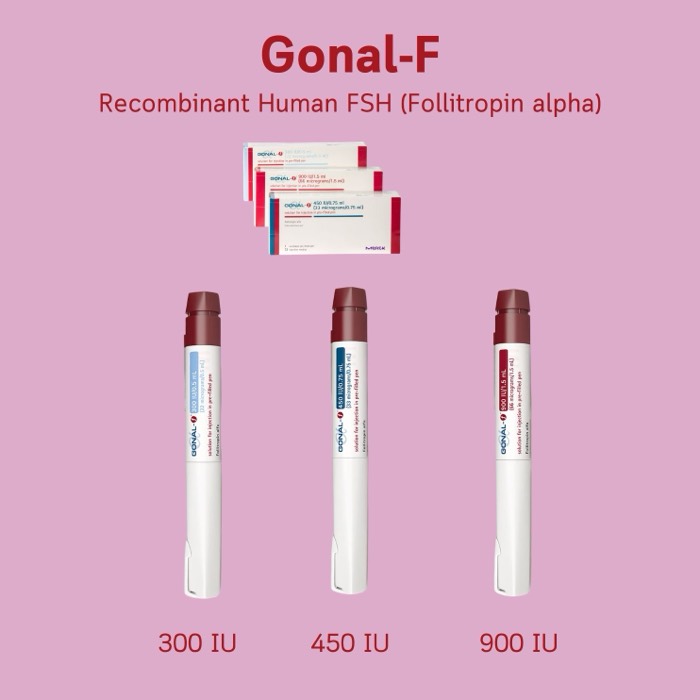
Gonal-F®
Recombinant FSH — follitropin alfa
Manufactured from Chinese hamster ovary cell line. Prefilled pen with adjustable dose — you can dial the dose up or down, but you cannot dial back once dispensed.
Prefilled pens: 300 · 450 · 900 IU · IUI: 50–100 IU/day · IVF: 150–300 IU/day (up to 450 IU when needed)
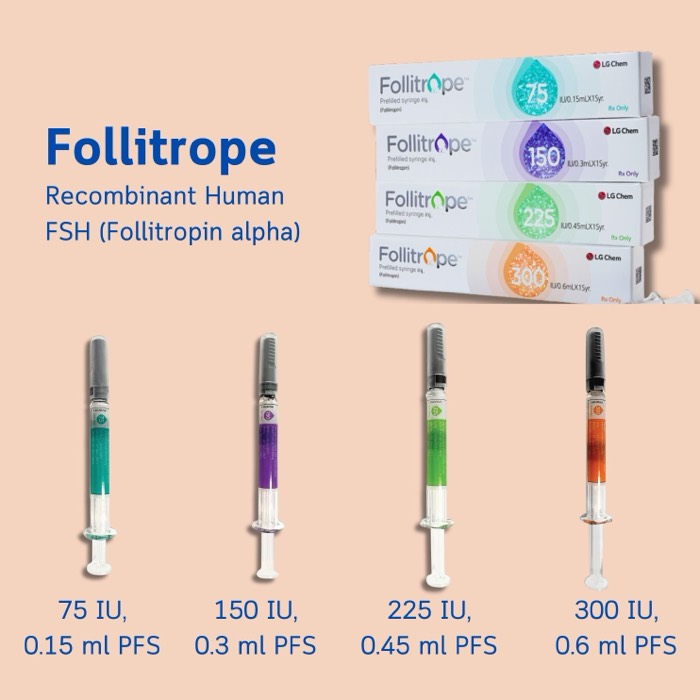
Follitrope®
Recombinant FSH — follitropin alfa
Same active ingredient as Gonal-F, delivered as prefilled single-use syringes — no dose adjustment; you use exactly what's in the syringe.
Prefilled syringes: 75 · 150 · 225 · 300 IU
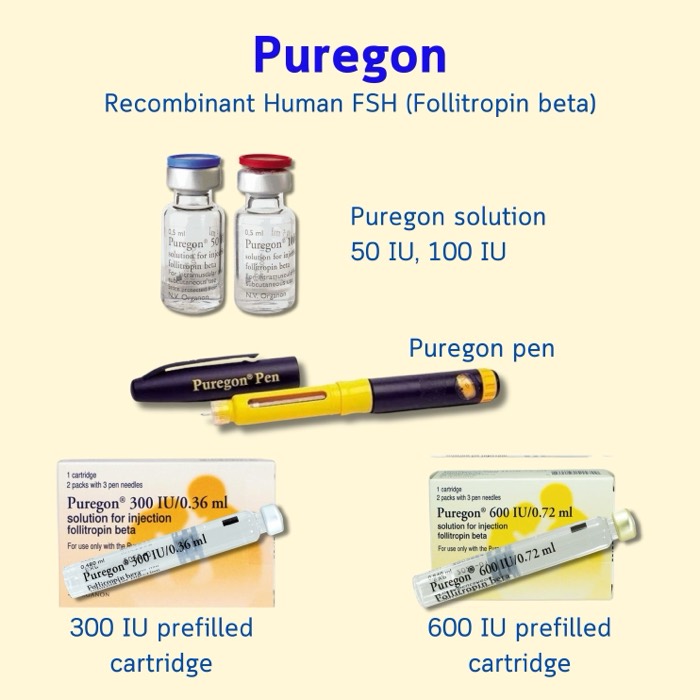
Puregon®
Recombinant FSH — follitropin beta
Also from Chinese hamster ovary line. Available as vials (50, 100 IU — mix yourself) or as prefilled cartridges (300, 600 IU) that need Puregon's own pen. Dial forward only — do not reverse.
Vials: 50 · 100 IU · Cartridges: 300 · 600 IU
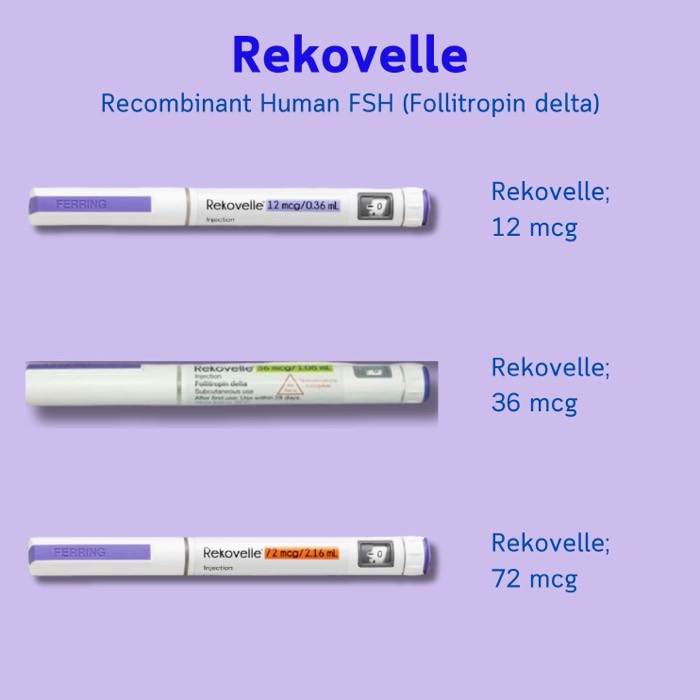
Rekovelle®
Recombinant FSH — follitropin delta
Manufactured from a human fetal retinal cell line, so the molecule is closer to native human FSH. Dosing is in micrograms, not IU. Adjustable prefilled pen.
Prefilled pens: 12 · 36 · 72 mcg
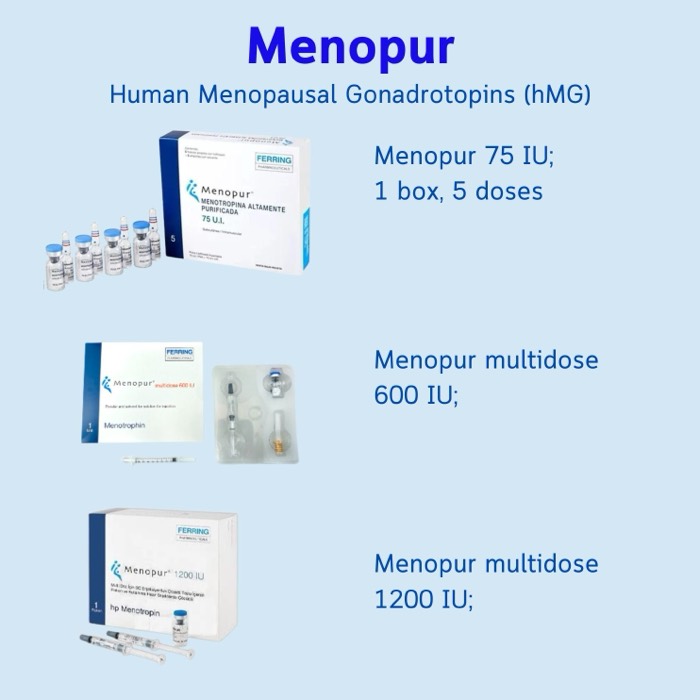
Menopur®
Human Menopausal Gonadotropin (hMG)
Purified from postmenopausal women's urine. Contains FSH plus hCG-driven LH activity — useful when a patient truly needs LH added. Multidose vials let the doctor prescribe custom doses.
Vials: 75 IU · Multidose: 600 IU · 1200 IU · custom orders 37.5 – 300 IU
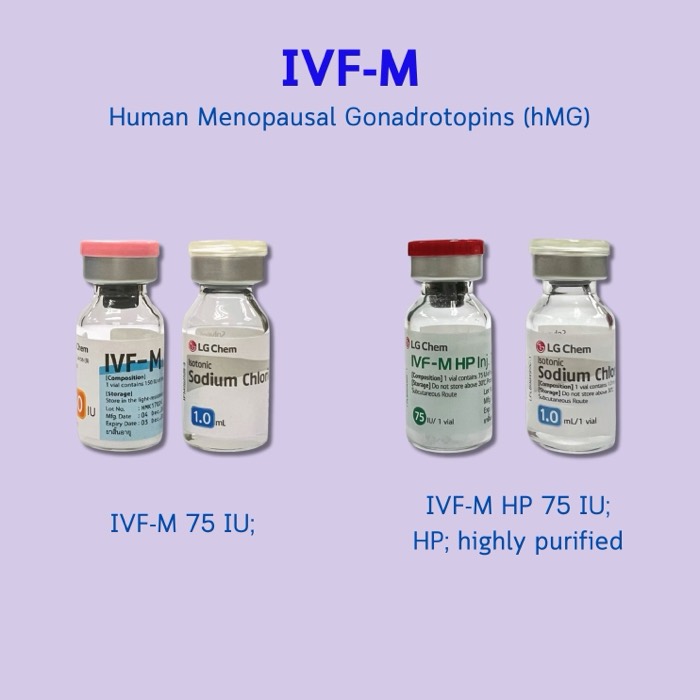
IVF-M™ / IVF-M HP™
hMG (no added hCG)
Another hMG. In Thailand only the 75 IU vial is available (some countries also carry an IVF-M HP 600 IU multidose).
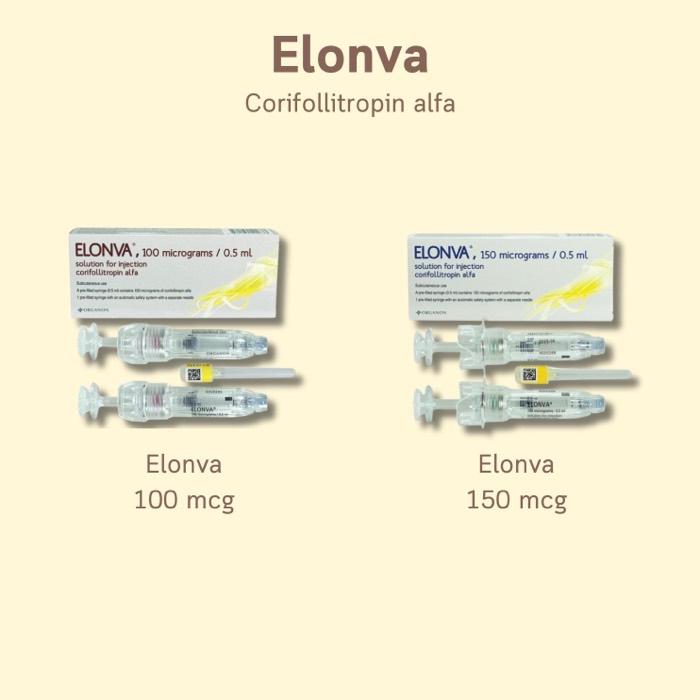
A modified FSH fused with hCG's tail — one injection lasts 7 days, so daily jabs during the first week aren't needed.
Prefilled syringe: 100 · 150 mcg
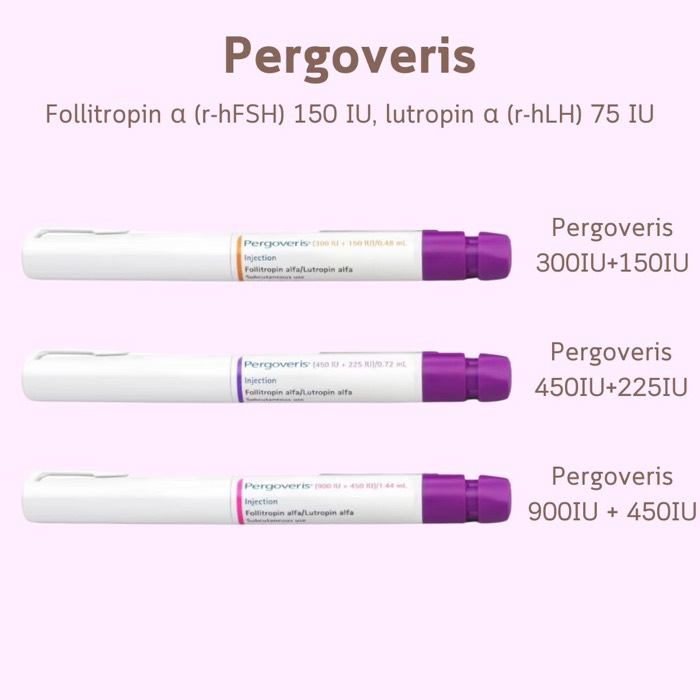
Pergoveris®
Recombinant FSH + recombinant LH (2:1)
The only combination product with both r-hFSH (follitropin alfa) and r-hLH (lutropin alfa) in the same pen — for patients who genuinely need supplemental LH.
Prefilled pens: 300+150 · 450+225 · 900+450 IU
2
Ovulation blockers — keeping the eggs in place
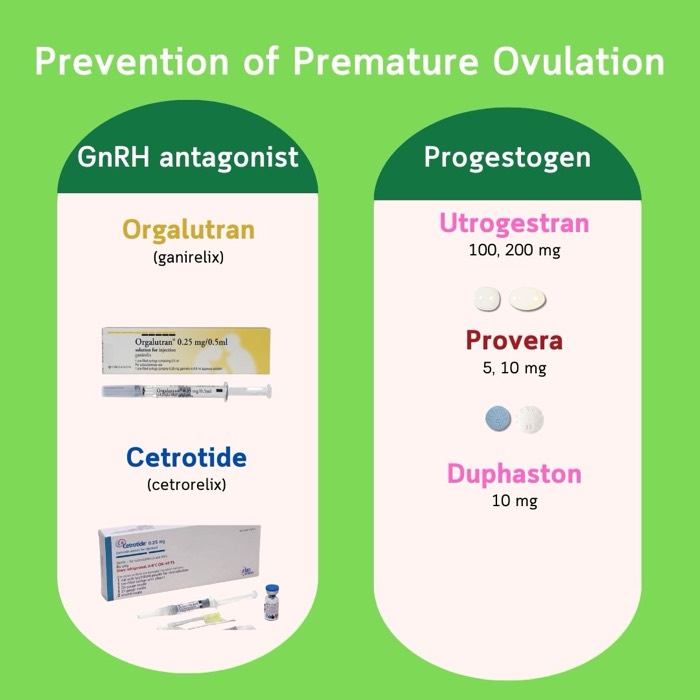
Figure 4. Two families of ovulation blockers — GnRH antagonists and Progestogens.
Once follicles grow, estrogen rises and the brain wants to release an LH surge — which would trigger ovulation before we can retrieve the eggs. We prevent this with one of two families:
Orgalutran®
GnRH antagonist — ganirelix
Directly blocks GnRH receptors, so no LH surge can be triggered. Prefilled syringe — pull out, inject, done.
250 mcg (0.25 mg) prefilled syringe
Cetrotide®
GnRH antagonist — cetrorelix
Same drug class. Comes as vial + water — reconstitute before injecting.
250 mcg (0.25 mg) vial
Progestogens (PPOS)
Progesterone-Primed Ovarian Stimulation
Progesterone blocks the LH surge just like it does in birth control. In PPOS we use progestogens to prevent premature ovulation. Common choices: Provera, Duphaston, Utrogestan, Cerazette, and Visanne (dienogest).
3
Trigger shot — releasing the eggs on schedule
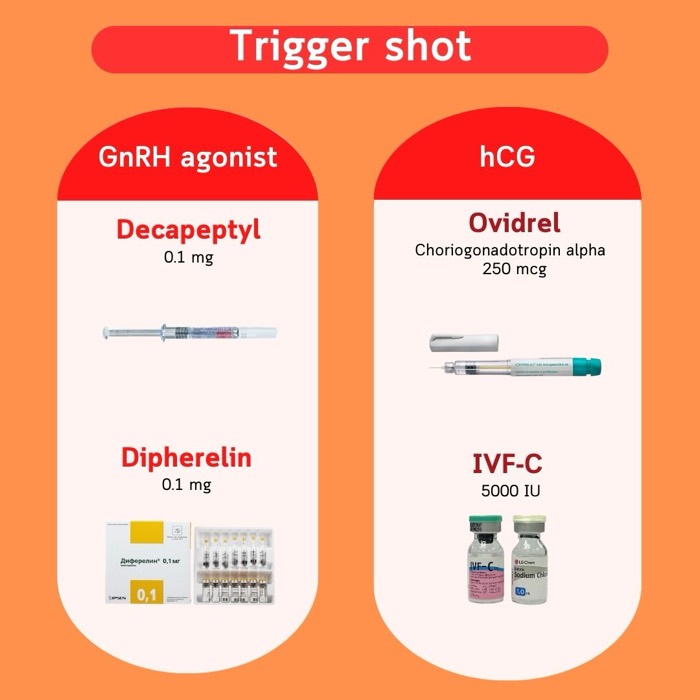
Figure 5. Trigger shots — GnRH agonists and hCG-based options.
Once the follicles reach the right size, we need to send a signal so the eggs finish maturing and become collectable. Two options:
Decapeptyl
GnRH agonist — triptorelin
Prefilled syringe — quick surge of LH from the body's own pituitary. Useful in patients at high risk of OHSS.
0.1 mg prefilled syringe
Diphereline®
GnRH agonist — triptorelin
Same agonist mechanism, delivered as vial + reconstitution.
0.1 mg vial
Ovidrel®
Recombinant hCG — choriogonadotropin alfa
hCG binds the same LH receptor and stays active longer than native LH — so it's a reliable "single-shot" way to trigger ovulation.
250 mcg prefilled pen
IVF-C
Urinary hCG
Purified hCG from urine. Vial — inject intramuscularly. (Older brand Pregnyl is no longer sold in Thailand.)
5000 IU vial
4
Embryo-transfer cycle — preparing the uterine lining
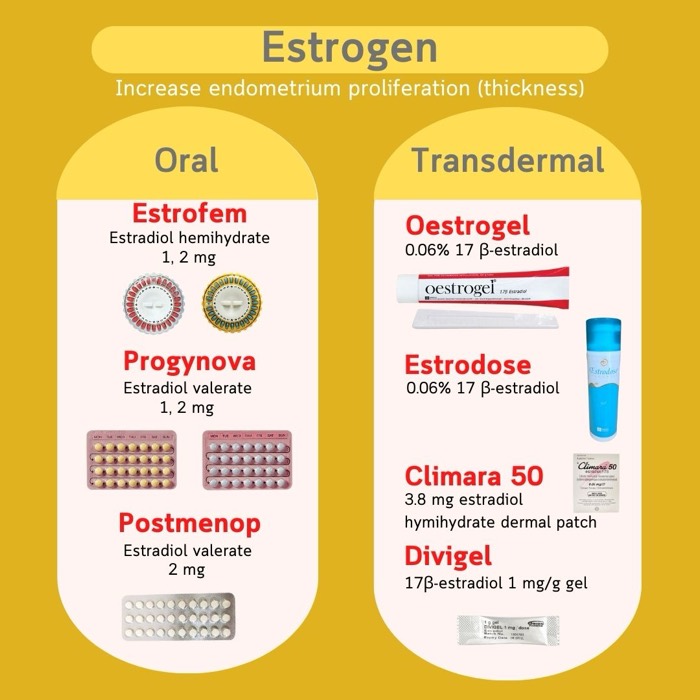
For frozen embryo transfers (FET) we typically use just two hormones: estrogen in the first half of the cycle to thicken the endometrium, then progesterone in the second half to make it receptive.
Estrogen — building the endometrium
Figure 7. Estrogens sold in Thailand — oral tablets vs. transdermal gels and patches.
Available as tablets, transdermal gels/patches, and vaginal preparations. Route matters: oral estrogen gets filtered by the liver first, so only 10–20 % of an oral dose reaches the uterus (a typical oral dose is 4 mg a day). Transdermal (skin) delivers 70–80 %.
Estrofem
Oral · Estradiol hemihydrate
1 · 2 mg tablets
Progynova
Oral · Estradiol valerate
1 · 2 mg tablets
Postmenop
Oral · Estradiol valerate
2 mg tablets
Oestrogel
Transdermal · 0.06 % 17β-estradiol
Applied to skin daily
Estrodose
Transdermal · 0.06 % 17β-estradiol
Applied to skin daily
Climara 50
Transdermal patch · Estradiol hemihydrate
3.8 mg patch, weekly
Divigel
Transdermal gel · 17β-estradiol 1 mg/g
Applied to skin daily
Progesterone — welcoming the embryo
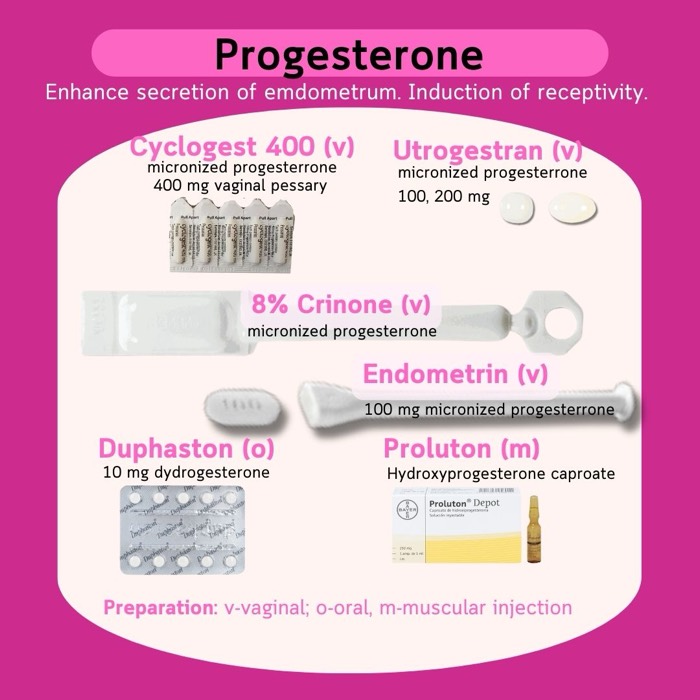
Figure 9. Progesterones sold in Thailand — vaginal preparations (v), oral (o), and intramuscular (m).
Oral progesterone gets metabolized so heavily it can cause nausea and dizziness, so we mostly use vaginal preparations and intramuscular injections instead. Dydrogesterone (Duphaston) is a synthetic that avoids those side effects and can be taken by mouth.
Utrogestran
Micronized progesterone
100 · 200 mg vaginal capsules
Cyclogest 400
Micronized progesterone
400 mg vaginal pessary
Crinone 8 %
Micronized progesterone gel
Vaginal gel applicator
Endometrin
Micronized progesterone
100 mg vaginal insert
Duphaston
Dydrogesterone (oral)
10 mg tablet
Proluton Depot
Hydroxyprogesterone caproate
IM injection · long-acting
What progesterone actually does after transfer: shifts the endometrium from a proliferative to a receptive (secretory) state, softens the lining so the embryo can implant, quiets uterine contractions, and balances the local immune response.
5
Adjuncts and other medications
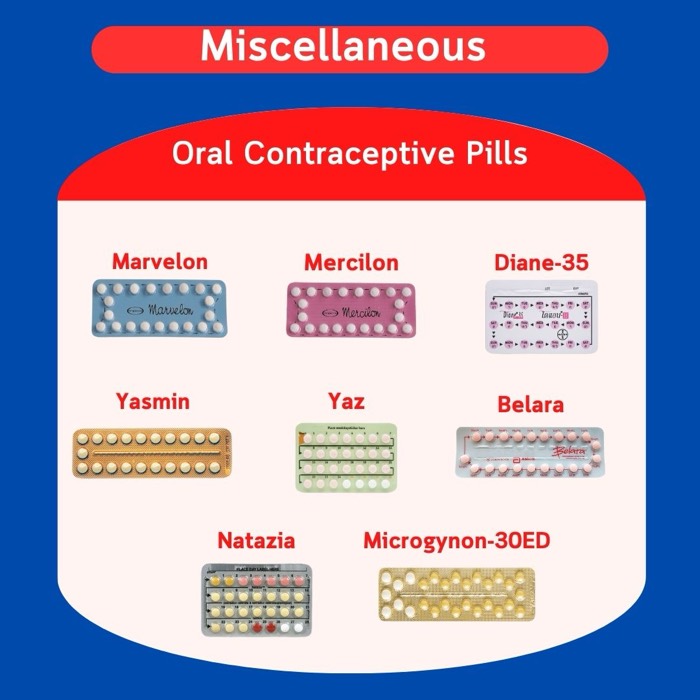
Combined oral contraceptive pills (COCPs)
Figure 11. Oral contraceptive pill brands used in cycle scheduling and cyst suppression.
Sometimes prescribed before a cycle to regulate menses or to suppress a leftover cyst. Common Thai-market brands: Marvelon, Mercilon, Diane-35, Yasmin, Yaz, Belara, Natazia, Microgynon-30ED.
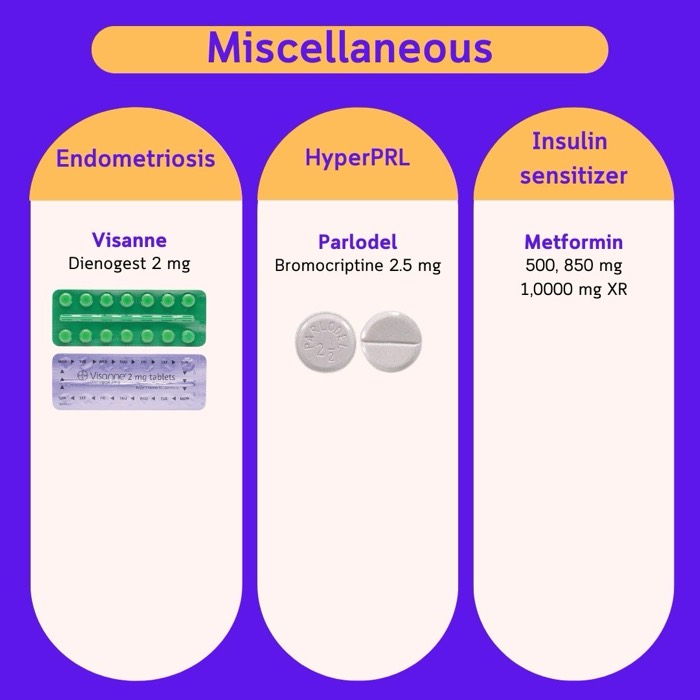
Figure 12. Adjunct medications for endometriosis (Visanne), hyperprolactinemia (Parlodel), and insulin resistance (Metformin).
Visanne
Dienogest 2 mg
For endometriosis or chocolate cysts — often used before an IVF cycle to calm active disease.
Parlodel
Bromocriptine 2.5 mg
Dopamine agonist for hyperprolactinemia. High prolactin can suppress ovulation.
Metformin
Insulin sensitizer
For PCOS patients with insulin resistance — helps restore ovulation and improves stimulation response.
500 · 850 mg · 1000 mg XR
Confused by your prescription?
Bring your list to your next visit — Dr. Patsama will walk through every drug, why it's there, and what to expect. No question is too basic.
This article is an English adaptation of the Thai-language essay "ยาที่ใช้ในการรักษามีบุตรยาก IUI IVF ICSI มีอะไรบ้าง? แต่ละตัวทำงานอย่างไร?" by Dr. Patsama Vichinsartvichai, MD, EFOG-EBCOG, EFRM-ESHRE/EBCOG, FACOG, MClinEmbryol. Brand and dosing information reflect products sold in Thailand at the time of writing and can change; always follow your prescribing physician's directions.
Dr. Patsama Vichinsartvichai, MD, MClinEmbryol, EFOG-EBCOG, EFRM-ESHRE/EBCOG, FACOG is a board-certified reproductive endocrinology & infertility specialist, former head of the Vajira IVF unit at Navamindradhiraj University, and founder of LIFE by Dr. Pat in Bangkok. His published research focuses on the dysmorphic (T-shaped) uterus and uterine-factor infertility.
 LIFE by Dr. Pat